Welcome. I’m really glad you’re here.
You’ve probably been considering therapy for a while. Perhaps you feel overwhelmed by the daily grind. Struggling to balance the weight of work and family. Something about the way things have been is no longer working.
Maybe you feel trapped in a familiar negative headspace. Prone to overthinking. Distracted at work. Less present at home. Or simply feeling stuck.
Sometimes the ways we've always managed stop working. Sometimes life simply asks more of us than we have capacity for.
That’s where I come in. I’m Jenna Simpson, a Licensed Clinical Social Worker, providing virtual psychotherapy to adults throughout New York State.
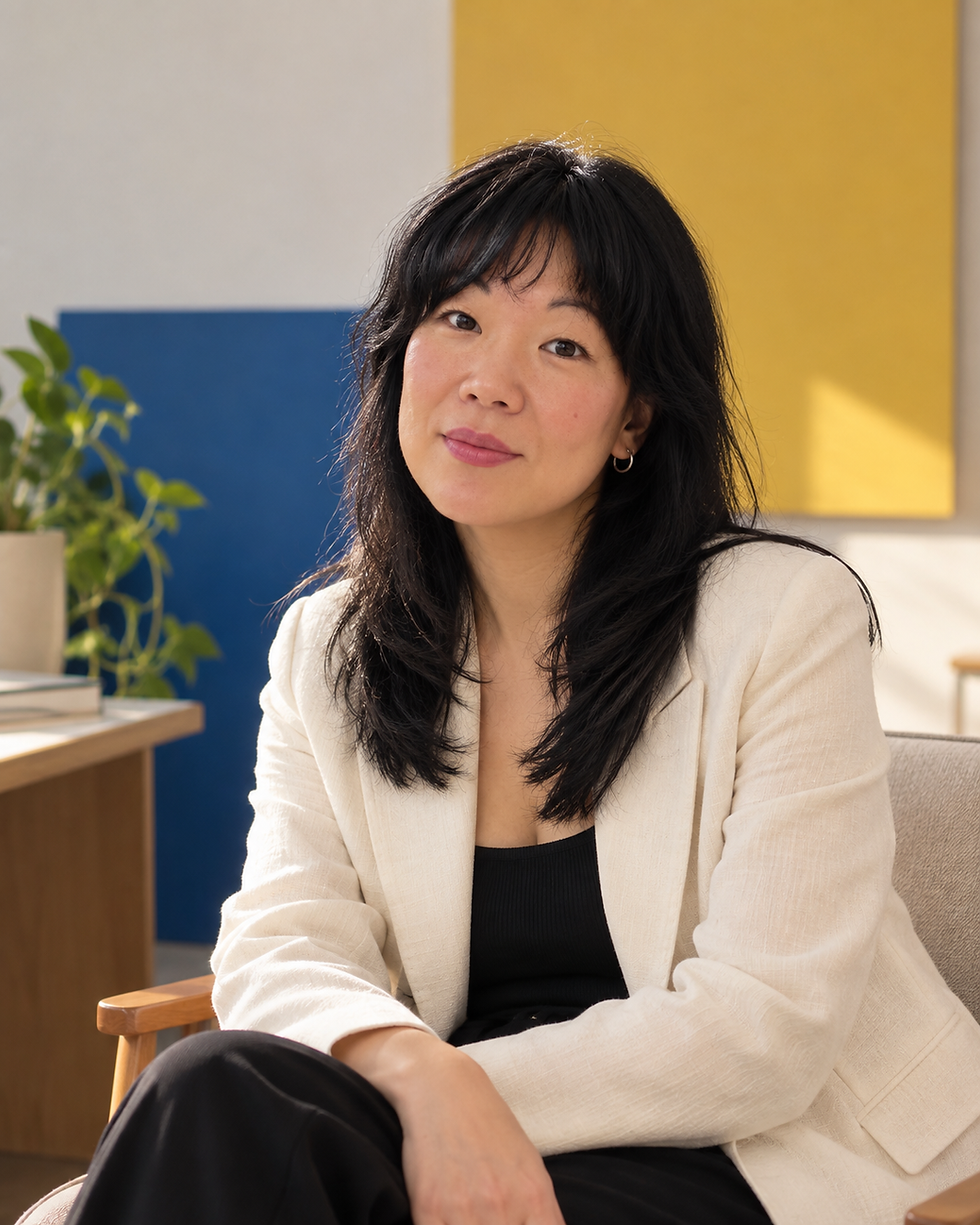
01 / THE PEOPLE
Who I Work With
I work with adults across different identities, cultures, family structures, and stages of life.
Young adults finding their footing. Parents and caregivers. Students, creatives, and professionals. Empty nesters and retirees. Adventurers and homebodies. People who've spent years in therapy, and people who are considering it for the first time.
Some are used to being the capable one. They may be perfectionists, people pleasers, or over-thinkers. Others have learned to mask, over-accommodate, or keep going long after their own needs have been pushed aside.
I also work with people navigating complex trauma, attachment injuries, ADHD, PMDD, adoption, and changes related to identity, relationships, work, health, or family life.
Some arrive determined to be good at therapy—books read, journal in hand. Sometimes we discover that the need to do therapy correctly is part of the work.
Others close the laptop and barely think about therapy again until we meet.
That can tell us something, too.
You don't need to know exactly what category you belong in. Sometimes you just know something isn't working the way it used to. We can start there.
I pay attention to patterns, contradictions, and what might be easy to overlook. I ask questions, make connections, and try not to settle too quickly on the first explanation.
03
I draw from a range of approaches.
My work draws from attachment theory, parts-informed care, EMDR, Somatic EMDR, CBT, and DBT. I'm also attentive to how identity, culture, and social conditions shape our experiences.
02
I consider the bigger picture.
Similar struggles can have very different roots. I consider the history, relationships, biology, and circumstances shaping your experience. The distinctions matter when we're figuring out what might help.
04
I adapt my approach.
Sometimes we explore what's underneath a pattern. Other times, we focus on practical tools for navigating what's happening right now. Often, we do both.
I'm interested in what helps, for whom, under what conditions, and when.
02 / MY APPROACH
How I Work
I'm interested in the details that change the story.
Therapy isn't one-size-fits-all. I take time to understand your history, goals, and the many factors shaping your experience, so we can figure out what might actually help.
01
I notice what's beneath the surface.
03 / AREAS OF FOCUS